
Independent pet retailers are operating in a market that is still growing, but also becoming more demanding. According to the American Pet Products Association, U.S. pet industry expenditures reached $158 billion in 2025 and are projected to rise to $165 billion in 2026, while 95 million U.S. households owned at least one pet in 2025. That is a large, resilient market, but it is not an easy one. That’s why businesses need pet retail modernization.
Growth does not automatically translate into healthy margins, especially when labor, replenishment, pricing pressure, and operational complexity are all pulling in the wrong direction. That is exactly why Epicor’s recent article, Why Independent Pet Stores Modernize to Protect Margins, is so relevant.
The article makes a straightforward point: independent pet retailers are not losing margin only because of external pressure. They are also losing margin through internal friction, such as manual inventory work, expired product, phantom stock, and disconnected processes. Epicor argues that the right retail technology helps eliminate that friction without forcing passionate operators to become technology specialists.
For Stratify Holdings, that message matters well beyond pet retail alone. It speaks directly to how modern businesses across retail, distribution, and manufacturing protect profitability in a tighter operating environment. It also aligns closely with how our brands support the market:
- PropelloForce helps retailers modernize operations and customer experience.
- ProphetForce helps distributors create visibility, accuracy, and fulfillment consistency.
- KineticForce helps manufacturers build more connected, efficient, and margin-aware operations.
The pet industry is a strong example, but the lesson is broader: margin protection today depends on connected systems, real-time visibility, and operational discipline.
The Real Margin Problem in Pet Retail
Epicor’s article describes a reality many independent retailers already know well. Costs are rising, consumers are more price sensitive, staffing remains difficult, and administrative complexity keeps growing. In that environment, manual processes become expensive in ways that are not always obvious at first glance. Epicor specifically points to time lost on spreadsheets, perishable product expiring on shelves, and phantom out-of-stocks that send loyal customers elsewhere.
That is an important reframing. Many businesses still think of technology investment as a new cost. In practice, the higher cost is often the status quo.
When a retailer spends hours every week reconciling inventory manually, that labor is already being paid for. When the system cannot catch a replenishment issue soon enough, the lost sale is real. When a customer walks in looking for a premium product and the shelf count is wrong, the damage is not just that transaction. It is trust. In a category like pet retail, where repeat relationships matter and product guidance is part of the value proposition, trust erosion is especially dangerous. Epicor notes that independent pet stores compete not by acting like big-box chains, but by combining expertise and personal service with better operational support.
That is where modernization becomes strategic rather than cosmetic.
Why Modernization Is Really About Operational Friction
Epicor frames the issue well: the right technology should remove operational friction. In the pet retail context, this includes better visibility into purchasing, receiving, on-hand inventory, sales activity, category performance, supplier management, automatic and suggested reordering, loyalty data, analytics, and unified commerce.
Those capabilities matter because margin pressure rarely comes from one dramatic failure. It usually comes from a hundred smaller leaks:
- A slow receiving process.
- An overstocked seasonal category.
- A missed transfer opportunity between locations.
- An inaccurate reorder point.
- A disconnected eCommerce and store inventory environment.
- A loyalty program that collects data but does not help staff act on it.
Epicor’s Propello materials reinforce this point. The platform is positioned as a cloud-based retail management system for independent retailers, with capabilities for purchasing and receiving, multi-store operations, suggested and seasonal purchasing, order-point replenishment, and connected integrations across eCommerce and other applications.
From Stratify Holdings’ perspective, this is exactly the kind of modernization that protects margin because it improves decision quality at the operational level.
What This Means for PropelloForce
For PropelloForce, the connection is the most direct.
Independent pet stores do not need generic software theory. They need practical control over purchasing, replenishment, inventory movement, store-level execution, and customer engagement. Epicor highlights several capabilities that map directly to those needs: real-time product tracking, predictive and seasonal purchasing support, mobile POS with customer and loyalty data, and a unified view of performance across the business.
Epicor also states that Propello supports automated purchasing and receiving for one-store or multi-store environments, special orders, enterprise purchasing, in-transit tracking, suggested purchasing, seasonal purchasing, and cross-store inventory management.
That matters for a pet retailer because the business model is more complex than it often appears from the outside. A store may be balancing staple food products, premium and perishable items, local assortment differences, promotional goods, supplements, accessories, services, and special orders. If those workflows are disconnected, margin gets squeezed from both sides: too much stock in the wrong places and not enough stock where demand is strongest.
This is where PropelloForce creates value. The opportunity is not simply to “digitize” the store. It is to help retailers operate with:
- cleaner replenishment logic,
- stronger sell-through visibility,
- better inventory accuracy,
- more effective multi-location coordination,
- connected customer data,
- and faster decision-making.
For pet retailers in particular, modernization should help preserve the neighborhood-store advantage rather than dilute it. The goal is not to become a big-box clone. The goal is to use better systems so associates can spend less time fighting process issues and more time serving customers.
What This Means for ProphetForce
At first glance, Epicor’s pet retail article sounds like a retail-only conversation. It is not.
Every margin problem at the retail edge creates pressure upstream in distribution. That is why the same modernization logic also applies to ProphetForce.
If pet retailers are facing tighter margins, more value-oriented spending behavior, and a need for better replenishment accuracy, then distributors serving that market are under pressure to respond with greater speed, visibility, and consistency. APPA’s latest data shows the industry is still expanding, but consumers are becoming more intentional in how they spend. Dog ownership rose from 51% of U.S. households in 2024 to 53% in 2025, while spending behavior became more value-oriented; cat ownership also rose, with spending patterns indicating continued willingness to invest in supplies.
That means distributors cannot rely on loose execution. They need stronger forecasting, cleaner order management, better inventory positioning, and better visibility across products, suppliers, and customers.
This is where ProphetForce comes in. For distributors supporting pet retailers, the operational questions are familiar:
- Can we keep high-demand products available without bloating working capital?
- Can we shorten order friction for customers?
- Can we improve fill rates without adding chaos?
- Can sales, purchasing, warehouse, and finance work from the same operational truth?
While Epicor’s article focuses on the store level, its logic clearly extends upstream. A modern retail environment depends on a modern distribution environment behind it. If retailers want tighter replenishment, fewer phantom stock issues, and better customer responsiveness, distributors need systems that can support those expectations reliably. That is where ProphetForce helps businesses create clarity between demand, supply, service, and profitability.
What This Means for KineticForce
The same pattern extends further upstream to manufacturing, which is where KineticForce becomes highly relevant.
If independent pet stores and their distributors are trying to protect margins through better data, faster replenishment, and improved inventory accuracy, manufacturers cannot remain disconnected from that chain. They need greater visibility into demand signals, production planning, lead times, cost structures, and delivery performance.
That is particularly important in categories tied to pet retail, where assortment can include consumables, seasonal items, accessories, health-related products, and packaging-sensitive goods. Margin pressure downstream eventually forces discipline upstream. Manufacturers that still rely on fragmented scheduling, siloed data, or slow handoffs between departments are at a disadvantage.
This is not just a technology issue. It is a coordination issue.
KineticForce helps manufacturers modernize around the same core principle described in Epicor’s pet retail article: reduce operational friction so teams can focus on productive work instead of compensating for system gaps. In practice, that can mean stronger production visibility, better inventory and material alignment, improved responsiveness to channel demand, and more confidence in pricing and profitability decisions.
So while the Epicor article begins with the pet store, the business lesson is much bigger. Margin protection is a chain-wide discipline. Retail, distribution, and manufacturing either move toward connected operations together or they absorb the cost of fragmentation separately.
Why Pet Retail Modernization Matters for Stratify Holdings as a Whole
The bigger takeaway for Stratify Holdings is that modernization is no longer a niche initiative. It is a margin strategy.
Epicor’s article is valuable because it presents modernization as a concrete digital ambition. It presents it as a practical response to specific pain points: manual inventory effort, product waste, phantom stock, disconnected customer data, and limited visibility.
That is exactly how businesses should think about transformation in 2026.
Not as software for software’s sake. Not as change for branding purposes. Not as a giant abstract innovation project.
Instead, businesses should ask a harder and more useful question: where are we leaking time, accuracy, cash flow, and customer trust because our systems do not support the way we actually operate?
For retailers, this may be reflected in replenishment and store execution. For distributors, it may show up in order flow, inventory visibility, and fulfillment discipline. For manufacturers, it may show up in planning, throughput, and cost control.
Stratify Holdings exists to help businesses answer those questions practically through the right operational lens for their environment. That is why this conversation naturally spans PropelloForce, ProphetForce, and KineticForce rather than belonging to only one brand.
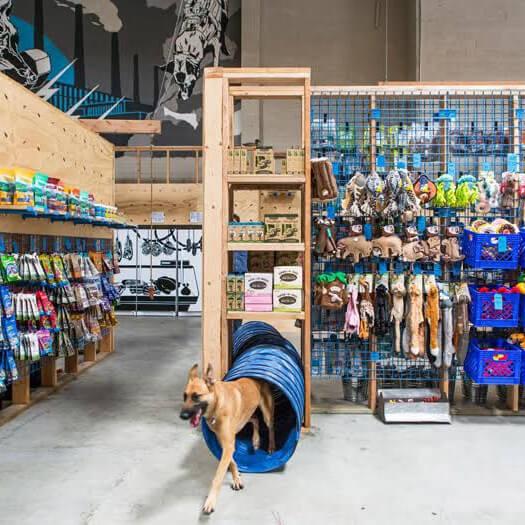
The Strategic Opportunity in the Pet Retail Modernization Market
The pet market remains attractive because it combines emotional customer loyalty with durable consumer demand. APPA’s latest figures show a large and still-growing market, but also one in which customers are becoming more intentional and value-conscious.
That combination creates an interesting reality. The opportunity is real, but an easy margin is not.
Independent pet businesses and the companies that serve them will likely perform best when they can combine three strengths:
- category expertise and customer trust,
- disciplined operational execution,
- and connected, modern systems that reduce friction.
Epicor’s article makes the case from the retailer’s point of view. Stratify Holdings would extend that case across the full operating chain. Retailers need better visibility and workflow support. Distributors need stronger control and responsiveness. Manufacturers need cleaner planning and operational alignment.
Those are not separate modernization stories. They are different expressions of the same one.
Final Thoughts on Pet Retail Modernization
Independent pet stores are not modernizing because it sounds trendy. They are modernizing because protecting margin now requires better systems, better data, and less operational waste. Epicor’s recent article captures that well by focusing on the hidden cost of manual work, stock inaccuracy, perishability, and disconnected operations.
For Stratify Holdings, the lesson is clear.
PropelloForce helps retailers modernize their customer and store operations.
ProphetForce helps distributors create the visibility and execution reliability retailers increasingly need.
KineticForce helps manufacturers support the channel with stronger planning, efficiency, and control.
In a market as resilient and competitive as pet retail, margin protection is no longer just a finance conversation. It is an operational systems conversation. And the businesses that understand that earliest will be better positioned to grow without giving away profitability.
If your business is evaluating how modernization can improve margin protection across retail, distribution, or manufacturing, contact Stratify Holdings to explore the right path forward for your operation.
